Analyzing Synchronization Lags Between Broadcast Feeds and Wager Confirmation Systems in Emerging Prediction Platforms
Parker Vogel · Aug 21, 2026
Analyzing Synchronization Lags Between Broadcast Feeds and Wager Confirmation Systems in Emerging Prediction Platforms
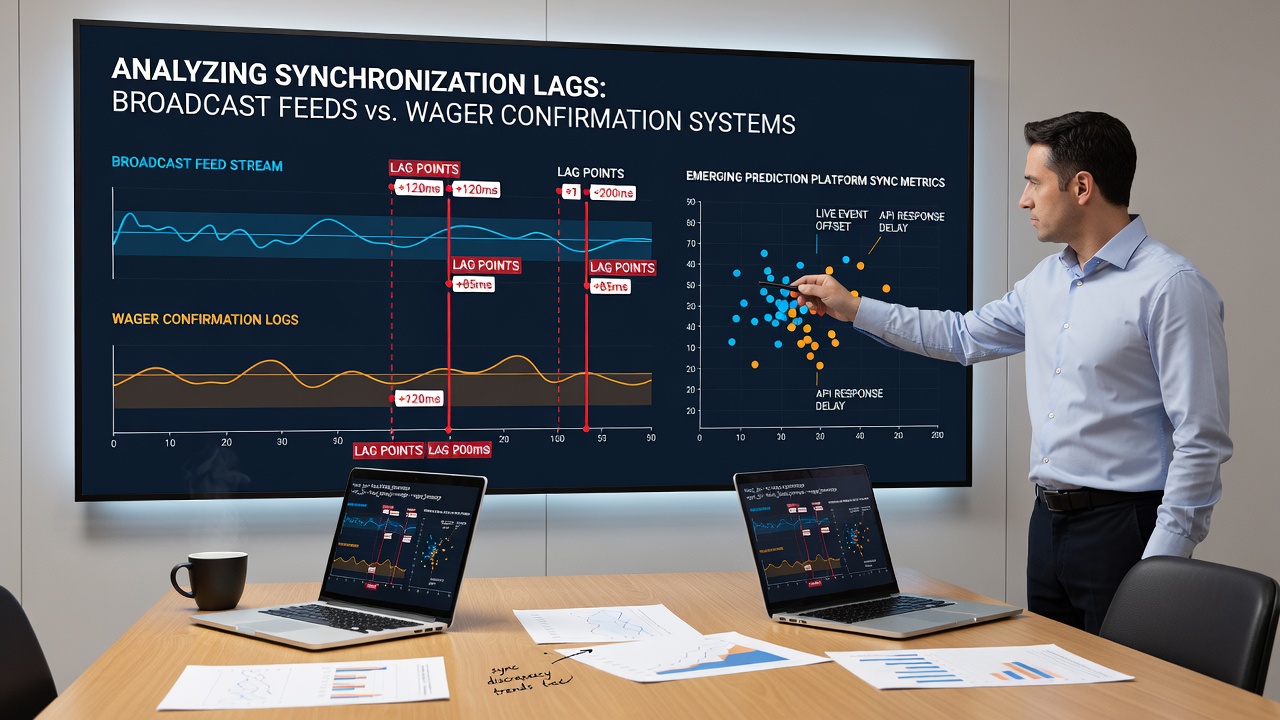
Emerging prediction platforms rely on tight coordination between live broadcast feeds and backend wager systems, yet synchronization lags persist as a core technical challenge. These delays arise when video signals travel through encoding, distribution networks, and content delivery infrastructures while wager confirmations depend on separate data pipelines that process user inputs and event outcomes. Observers note that such mismatches create windows where bettors place wagers based on slightly outdated visuals, which data from platform logs in August 2026 continue to flag as recurring friction points.
Network latency forms one primary source of these gaps, because broadcast streams often route through multiple hops across global content delivery networks before reaching end users, whereas wager systems transmit confirmations via direct API calls to centralized servers. Processing overhead compounds the issue when video decoders buffer frames to maintain quality, and simultaneously the confirmation engines validate odds against real-time event data feeds. Researchers at institutions tracking digital wagering infrastructure have documented average lags ranging from 3 to 12 seconds depending on region and platform load during peak events.
Core Technical Components Driving the Lags
Prediction platforms integrate several distinct layers that rarely operate in perfect unison. Broadcast encoders compress live footage using protocols such as HLS or DASH, which introduce variable buffering intervals, while wager confirmation modules handle JSON payloads through low-latency WebSocket connections. Experts tracking these architectures point out that discrepancies widen further when platforms incorporate third-party data providers for outcome verification, because each additional hop adds measurable milliseconds to the overall chain.
Geographic distribution plays a measurable role as well. Users accessing feeds from distant servers experience compounded delays compared with those near edge nodes, and wager systems located in specific jurisdictions must comply with local routing rules that sometimes reroute traffic through additional checkpoints. Figures from industry monitoring groups reveal that cross-border prediction activity in mid-2026 showed lag spikes of up to 18 percent during major international events.
Measured Impacts on Platform Operations
Discrepancies between what appears on screen and what the confirmation system registers affect both user trust and operational metrics. When a wager confirmation arrives after the broadcast has already shown an outcome shift, platforms must reconcile disputed entries through automated rollback protocols or manual review queues. Data collected across multiple operators indicates that unresolved lag-related disputes accounted for roughly 2.7 percent of total transaction volume during the summer months of 2026.
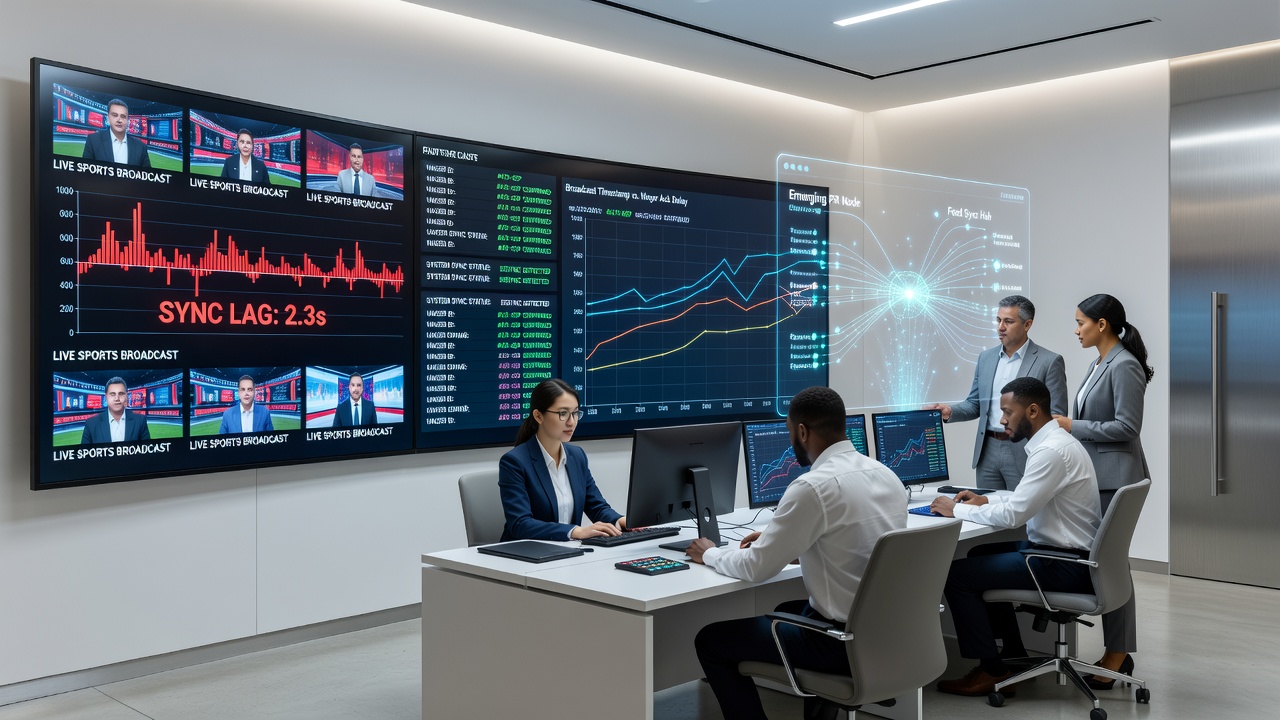
Regulatory bodies have begun examining these synchronization shortfalls as part of broader oversight frameworks. The New Jersey Division of Gaming Enforcement published operational guidelines in early 2026 that require platforms to report average end-to-end latencies for all live-market offerings, creating standardized benchmarks that operators now track monthly. Similar reporting expectations have surfaced in other jurisdictions, pushing engineering teams to prioritize latency reduction alongside compliance documentation.
Approaches to Measuring and Reducing Latency
Platform teams employ several diagnostic methods to quantify synchronization gaps. Timestamp embedding within video frames allows comparison against wager server logs, while synthetic transaction tests simulate user inputs at precise intervals to map delay distributions. One study conducted by academic researchers at the University of Melbourne examined 14 prediction platforms over a six-week window and found that edge-computing deployments reduced median lag by 41 percent relative to centralized architectures.
Additional mitigation techniques include adaptive bitrate streaming that adjusts quality based on real-time network conditions, parallel confirmation pathways that bypass certain validation steps during high-velocity periods, and predictive caching of probable outcomes drawn from historical event patterns. The European Gaming and Betting Association has highlighted case examples where operators combined these methods to keep average confirmation times under four seconds even during high-traffic windows.
Conclusion
Analysis of synchronization lags between broadcast feeds and wager confirmation systems reveals a multifaceted technical landscape shaped by network architecture, regulatory requirements, and evolving platform infrastructure. Continued measurement through standardized reporting and targeted engineering interventions has produced measurable reductions in average delays, yet the challenge remains dynamic as prediction platforms scale and incorporate new live-event formats. Observers tracking developments through August 2026 note that ongoing refinements in edge processing and data pipeline optimization continue to narrow these gaps across the sector.