Demographic Patterns Among Mobile Users Engaging with Competitive Match Forecasts on Emerging Platforms
Jonas Russell · Jun 2, 2026
Demographic Patterns Among Mobile Users Engaging with Competitive Match Forecasts on Emerging Platforms
Competitive match forecasts on emerging mobile platforms have drawn increasing attention from data analysts tracking user behavior across digital networks, and patterns in participation reveal distinct demographic clusters that shape how these tools evolve. Platforms focused on real-time predictions for esports matches, athletic contests, and simulation-based events collect anonymized metrics that highlight who engages most frequently and under what conditions. Researchers tracking activity through mid-2026 note steady expansion in mobile access, driven by improved network infrastructure and refined app interfaces that support quick updates during live events.
Platform Landscape and User Acquisition Trends
Emerging platforms operate through specialized mobile applications that deliver forecast models based on statistical inputs, historical performance data, and community contributions, while users interact via swipe-based voting systems or integrated chat features that update predictions in real time. Adoption rates climbed notably after infrastructure upgrades rolled out in early 2026, with developers reporting higher retention among those who access services during evening hours when competitive schedules align across global time zones. Observers note that these platforms often integrate with social media feeds, allowing seamless sharing of forecast results that further expands reach without traditional advertising channels.
Age and Gender Distributions in Mobile Forecast Engagement
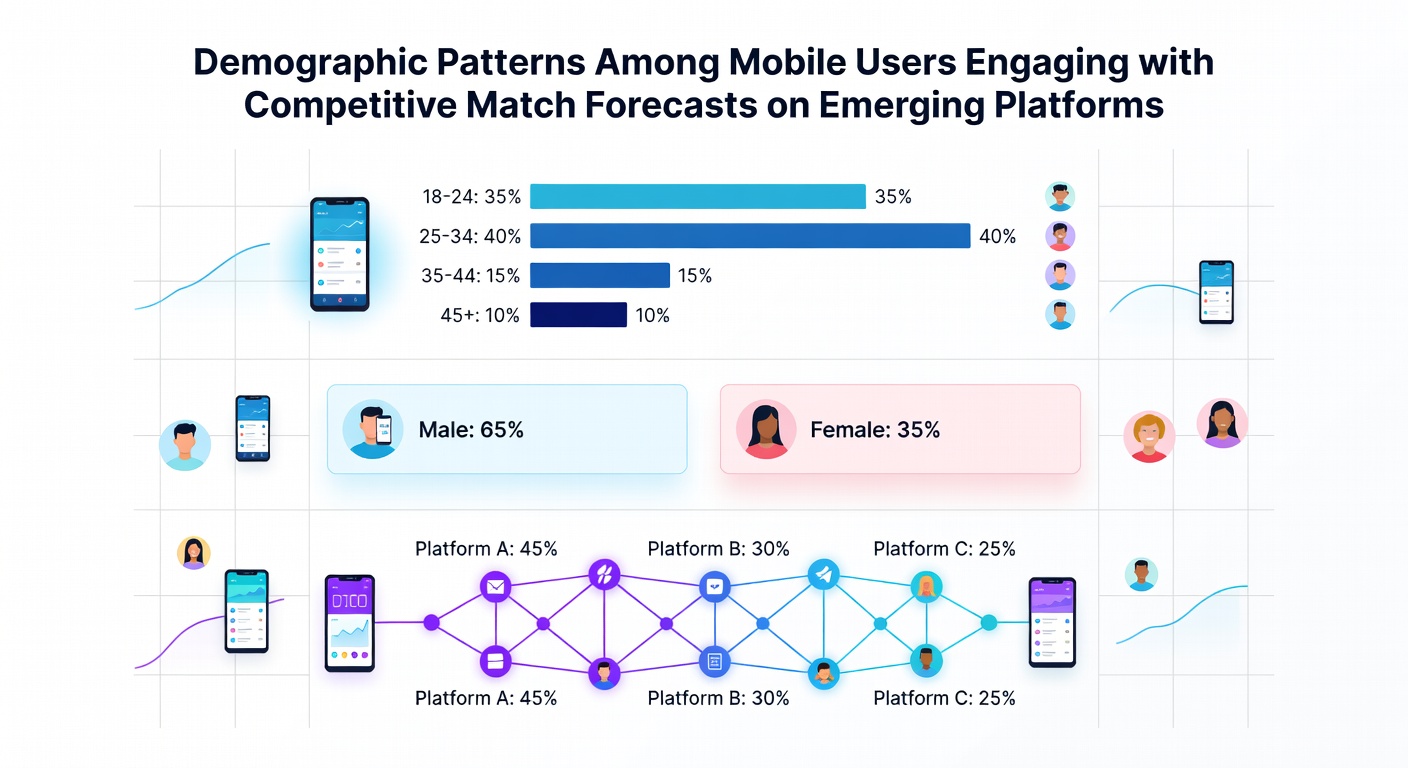
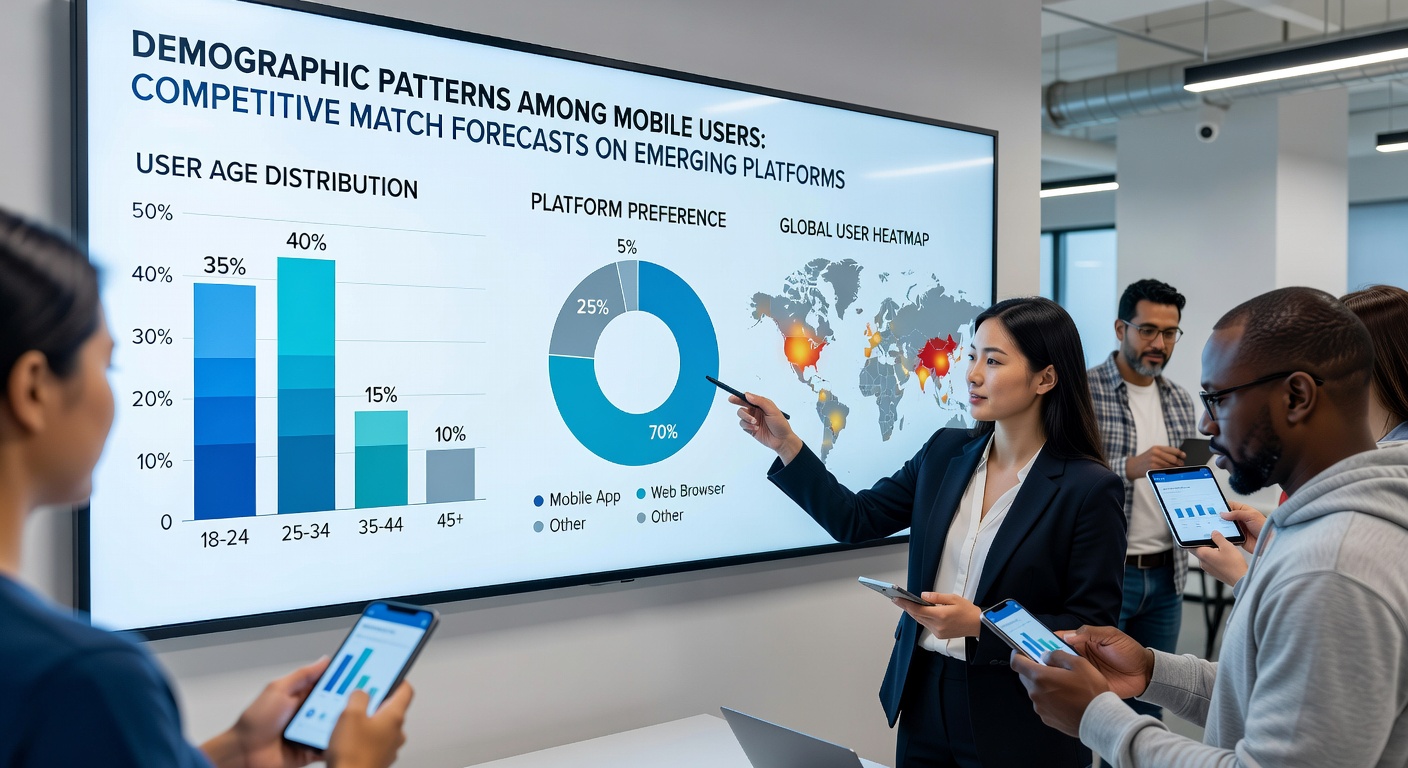
Data collected from platform operators shows that individuals aged 18 to 34 represent the largest segment of active mobile users, accounting for roughly 62 percent of session initiations during the first half of 2026, whereas participation from those over 45 remains comparatively modest at under 15 percent overall. Within this younger cohort, male users comprise approximately 58 percent of total engagements according to aggregated analytics reports, yet female participation has risen steadily in categories involving team-based simulations and strategy games. Studies from academic institutions confirm that device preference skews heavily toward smartphones rather than tablets, with session durations averaging 12 to 18 minutes when users check forecasts multiple times throughout a single match cycle.
Regional Variations and Access Patterns
Geographic distribution highlights stronger uptake in urban centers across North America and parts of Asia, where high-speed mobile coverage supports uninterrupted data streams during peak competitive windows. In contrast, rural areas show lower overall volumes but demonstrate consistent engagement from users who rely on these tools for localized amateur leagues rather than professional circuits. European markets display balanced splits between age groups, with slightly higher involvement from users in the 25 to 39 range compared to North American trends. Reports compiled by organizations such as the Pew Research Center illustrate how smartphone penetration correlates directly with forecast platform usage, particularly in regions where 5G deployment accelerated during 2025 and into June 2026.
Socioeconomic Factors and Device Usage Behaviors
Income levels among frequent users tend to cluster in middle-income brackets, where disposable resources support premium app subscriptions that unlock advanced forecast layers and historical datasets. Higher education attainment also appears as a recurring trait, with college graduates showing greater likelihood of cross-referencing multiple platforms before finalizing predictions. Device operating systems influence interaction styles, as Android users often favor extended browsing sessions while iOS participants demonstrate quicker decision-making patterns during live updates. These distinctions emerge clearly in heatmaps generated from usage logs, revealing how notification settings and background refresh permissions affect how often individuals return to check evolving match forecasts.
Engagement Timing and Platform Feature Preferences
Activity spikes occur most prominently between 7 PM and 11 PM local time across major markets, aligning with broadcast schedules for major competitive events, while weekday mornings attract lighter but more analytical users who review pre-match models rather than real-time adjustments. Feature preferences vary by demographic slice, with younger participants gravitating toward community-voted elements and leaderboard comparisons, whereas slightly older groups prioritize detailed statistical breakdowns and probability visualizations. Platform developers adjust interface layouts based on these observed habits, introducing modular designs that accommodate both quick glances and deeper dives into forecast methodologies.
Conclusion
Patterns identified through ongoing monitoring of mobile forecast platforms underscore how demographic factors intersect with technological access to determine participation levels and feature utilization. Continued data collection through the remainder of 2026 will likely refine these observations further, particularly as network capabilities expand and new competitive formats enter the ecosystem. Sources such as the European Commission digital reports provide supplementary context on broader mobile trends that intersect with these specialized applications, supporting objective analysis of user distributions without reliance on any single regulatory dataset.