Examining Cross-Platform Sync Challenges Between Mobile Apps and Viewer Bets in Niche Esports Forecast Broadcasts
Logan Vogel · Aug 21, 2026
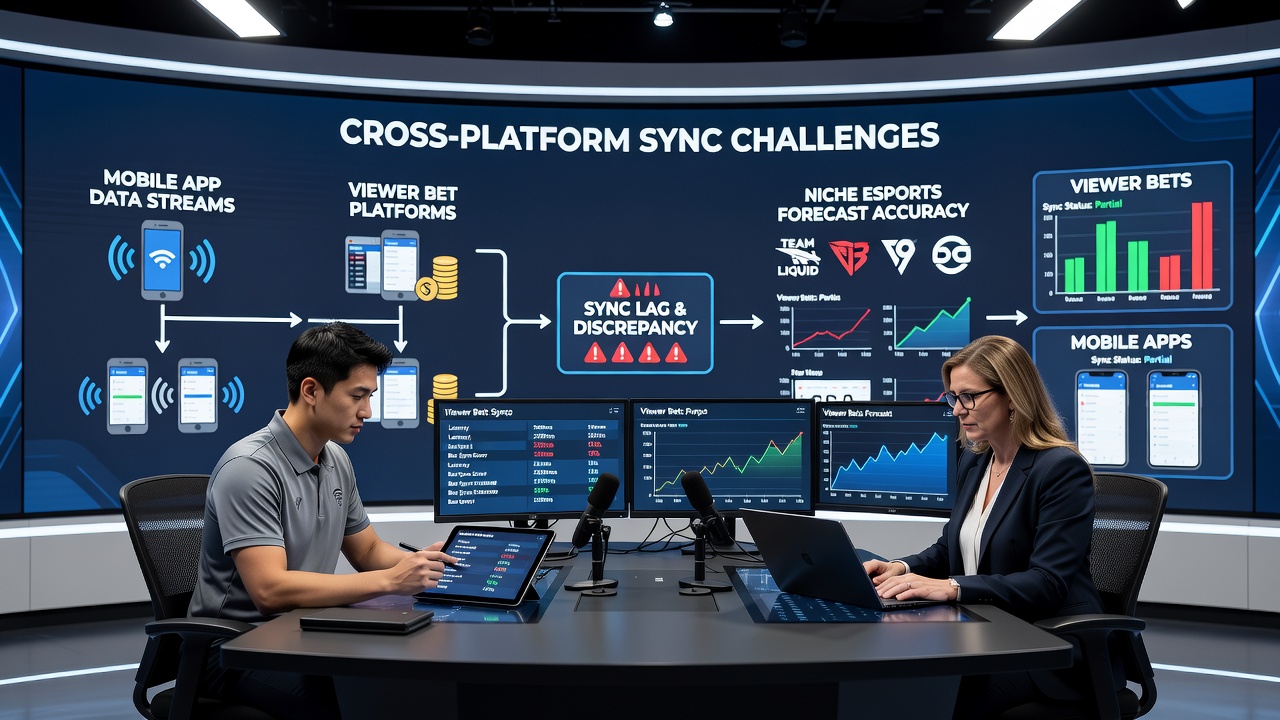
Examining Cross-Platform Sync Challenges Between Mobile Apps and Viewer Bets in Niche Esports Forecast Broadcasts
Cross-platform synchronization between mobile betting applications and viewer participation features in niche esports forecast broadcasts presents persistent technical obstacles that developers and broadcasters continue to address in 2026, and observers note that these difficulties arise from differences in data transmission speeds, operating system protocols, and live event timing requirements across various devices.
Latency and Data Alignment Issues
Real-time forecast broadcasts for lesser-known esports titles often encounter delays when mobile apps attempt to mirror viewer bets placed during live segments, because network conditions vary widely between regions and the underlying APIs used by different platforms process updates at inconsistent rates, which leads to mismatches where a bet registered on one device appears several seconds later on the broadcast overlay. Researchers at institutions studying distributed systems have documented how these delays compound during peak viewing hours when thousands of simultaneous connections strain server capacity, and data from August 2026 testing cycles revealed that certain Android builds experienced average lag times exceeding 800 milliseconds compared to iOS counterparts in controlled trials.
Platform-Specific Protocol Conflicts
Integration challenges intensify when niche esports communities rely on custom forecast tools that must interface with both proprietary mobile apps and third-party streaming software, since iOS and Android maintain separate push notification frameworks while web-based viewers operate through browser standards that do not always align with native code. Experts tracking these patterns report that synchronization failures frequently occur at the boundary between WebSocket connections and native socket layers, resulting in duplicate bet entries or missed updates that require manual reconciliation after the broadcast concludes, and case examples from mid-2026 tournaments showed that smaller development teams lacked the resources to maintain separate code branches for each platform.

Security and Compliance Considerations
Viewer bet data transmitted across multiple platforms must satisfy regional regulatory frameworks that impose distinct encryption standards and audit trails, which creates additional layers of processing that further slow synchronization speeds in niche esports forecast environments. According to findings presented in a International Telecommunication Union analysis of real-time media systems, cross-border data routing for esports events introduces variable compliance checks that can interrupt seamless updates, and operators handling international audiences in August 2026 encountered repeated instances where bets placed through mobile apps failed verification protocols enforced by certain jurisdictions. Those managing these broadcasts often implement fallback queues to store pending transactions until full validation occurs, yet this approach still leaves visible gaps in the live viewer experience during extended forecast segments.
Impact on Niche Community Engagement
Communities focused on specialized esports titles experience these synchronization shortfalls more acutely because their smaller scale limits access to enterprise-grade infrastructure that larger platforms use to mitigate similar problems, and studies of user retention patterns indicate that repeated sync errors correlate with higher dropout rates during interactive forecast periods. Observers tracking audience behavior across emerging platforms note that participants frequently switch devices mid-broadcast in attempts to resolve display inconsistencies, which fragments the shared viewing experience and complicates aggregate bet tracking for broadcasters. Data compiled through industry monitoring tools in 2026 showed that niche events suffered measurable drops in concurrent viewer bets when sync issues persisted beyond a two-second threshold, prompting some organizers to adopt hybrid verification methods that combine automated checks with periodic manual overrides.
Emerging Mitigation Strategies
Development teams addressing these cross-platform hurdles have begun experimenting with unified middleware layers that abstract device differences into standardized update protocols, while academic research groups continue to publish evaluations of edge computing approaches that bring processing closer to end users to reduce transmission delays. A review in Computers and Electrical Engineering examined several prototype implementations applied to esports prediction streams and found that localized caching combined with adaptive bitrate streaming yielded measurable improvements in alignment accuracy during live segments. Broadcasters covering niche tournaments have tested these methods in controlled August 2026 pilots, though widespread adoption remains limited by the need for coordinated updates across multiple independent app providers and streaming services.
Conclusion
Cross-platform synchronization between mobile applications and viewer bets in niche esports forecast broadcasts continues to evolve as technical standards advance and regulatory requirements shift across regions, with ongoing work focused on reducing latency gaps, standardizing protocols, and maintaining compliance without sacrificing real-time responsiveness. Data collected through 2026 demonstrates that while incremental progress occurs through middleware innovations and localized processing, persistent differences in device ecosystems and network conditions require sustained attention from developers and organizers alike to support reliable interactive experiences in these specialized broadcast formats.