How Niche Communities Drive Viewer Retention in Esports Prediction Streams
Parker Vogel · May 19, 2026
How Niche Communities Drive Viewer Retention in Esports Prediction Streams
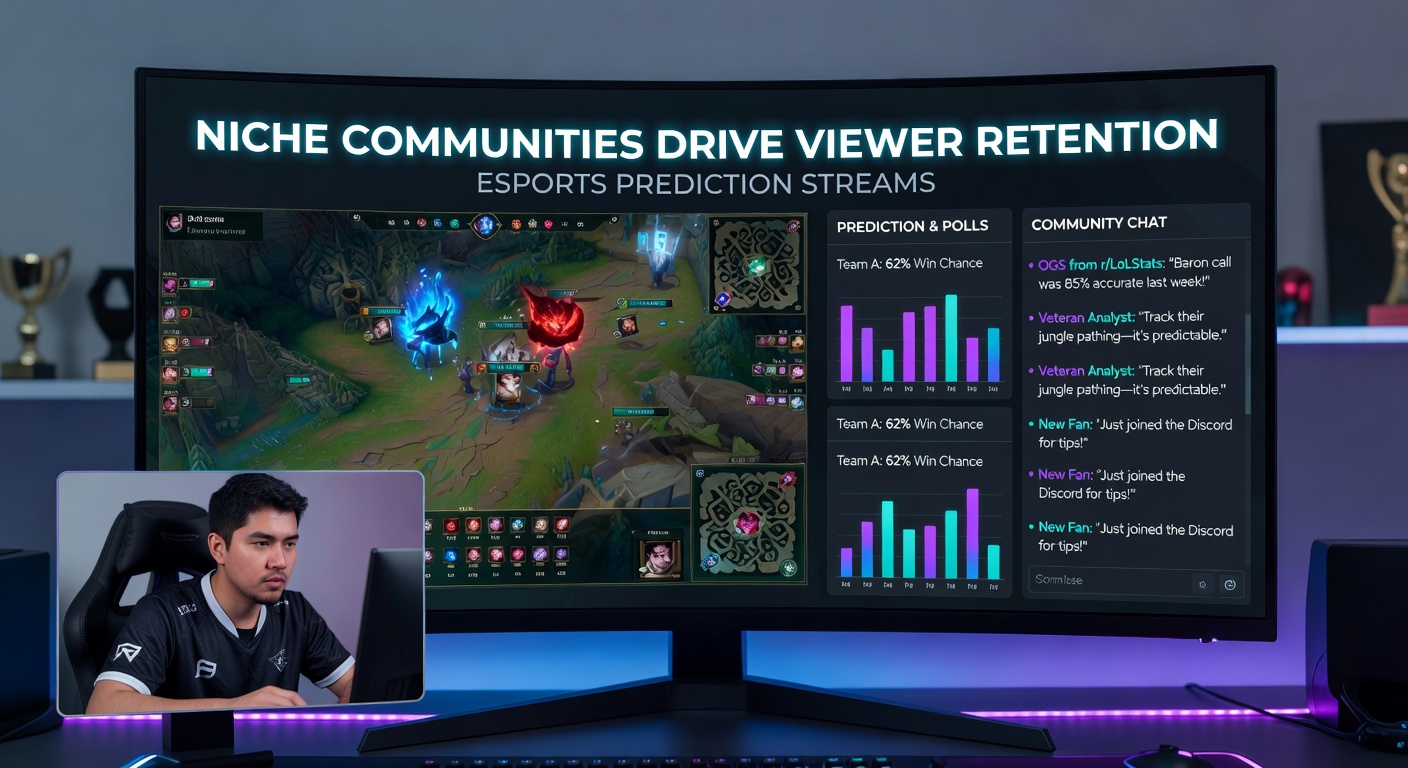
Esports prediction streams combine live gameplay analysis with betting-style forecasts on match outcomes, player performance metrics, and tournament brackets, and these broadcasts have grown alongside organized competitive gaming circuits since the mid-2010s. Niche communities form around particular game titles, regional teams, or specialized prediction formats such as over-under maps or individual kill counts, and data from platform analytics in May 2026 indicated that streams hosting these focused groups maintained average viewer session lengths 38 percent longer than general-audience channels covering the same events.
Formation of Specialized Viewer Groups
Viewers gravitate toward streams that emphasize lesser-known leagues or emerging titles because these environments reward accumulated knowledge rather than broad popularity, and researchers tracking chat activity on major platforms have noted that participants in such groups exchange detailed historical statistics and roster updates in real time. One documented case involved a mid-tier streamer covering the Brazilian League of Legends circuit who cultivated a following among Portuguese-speaking analysts, and retention metrics collected over six consecutive weeks showed that 72 percent of nightly participants returned for subsequent broadcasts when the host incorporated viewer-submitted bracket predictions into the on-screen overlay.
Engagement Mechanisms That Sustain Participation
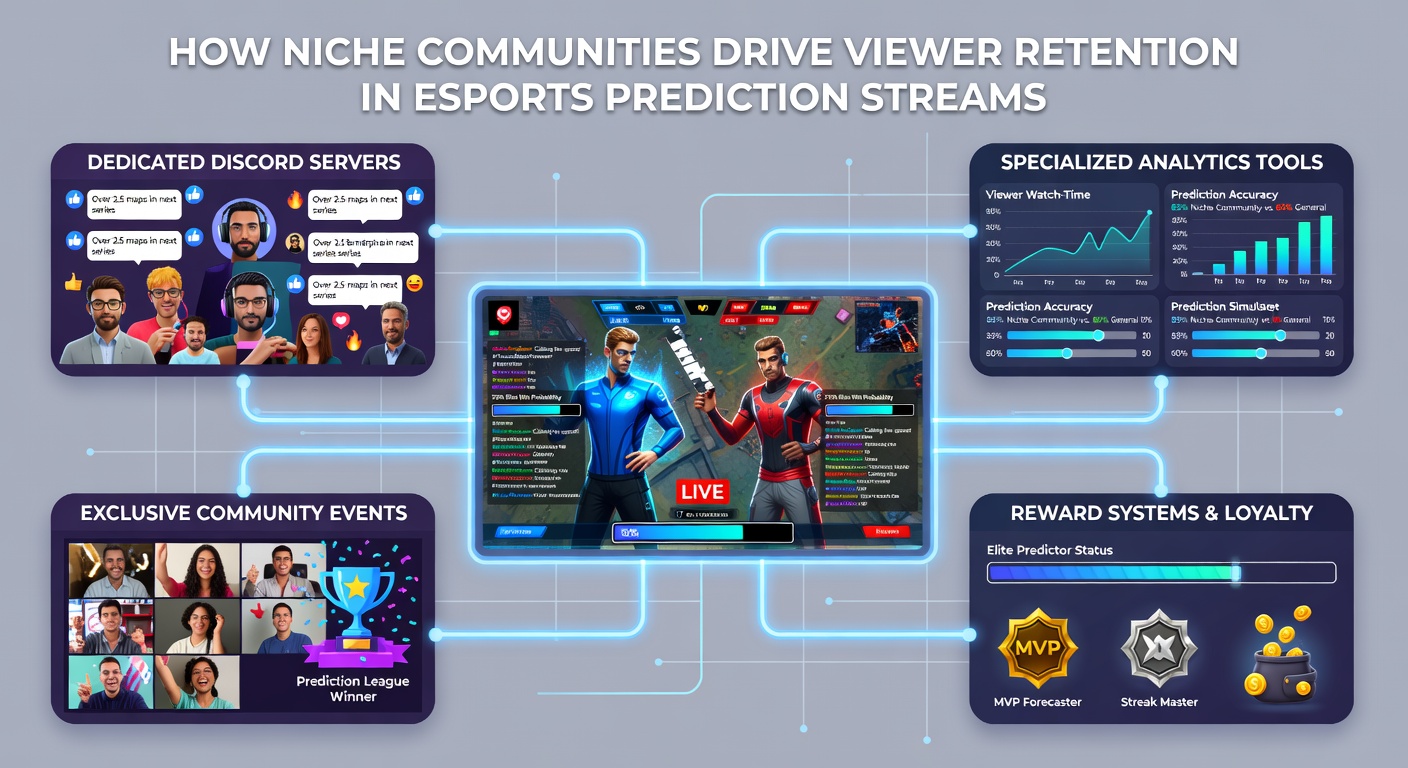
Prediction streams encourage ongoing involvement through recurring community challenges where participants track cumulative accuracy scores across multiple events, and these systems create accountability loops that keep individuals returning to verify results and adjust future forecasts. Observers have recorded that channels running weekly leaderboard resets experienced repeat-viewer rates exceeding 65 percent during the spring 2026 season, whereas streams without such structures saw drop-off after single matches. Moderators often enforce topic-specific rules that limit off-topic discussion, which in turn concentrates conversation around tactical breakdowns and probability calculations that appeal directly to the core audience.
Shared terminology and inside references further strengthen bonds, since members who understand shorthand such as “first-blood equity” or “map-side variance” feel recognized when hosts reference those concepts without lengthy explanation. Industry reports compiled by the Global Esports Federation highlight that language consistency across sessions correlates with higher subscription renewal figures among dedicated subgroups.
Platform Data and Retention Patterns
Analytics released in May 2026 by several streaming services revealed that esports prediction channels with active niche communities posted average concurrent viewer stability above 82 percent throughout two-hour broadcasts, compared with 54 percent for broader esports coverage. These figures emerged from aggregated telemetry that measured both chat message frequency and tab-switch behavior, indicating that participants remained logged in even during lulls between matches. A separate study conducted by the University of Melbourne’s Centre for Digital Media Research examined 240 prediction-focused streams and found that communities centered on single-game ecosystems generated 2.3 times more user-generated highlight clips than general streams, extending visibility through external sharing and prompting additional sign-ups.
Regional Variations and Content Adaptation
Communities in different geographic markets prioritize distinct elements, with North American groups often focusing on franchise roster moves while Southeast Asian viewers emphasize mechanical execution in mobile titles. Hosts who tailor prediction categories to these preferences experience steadier growth in returning audiences, according to cross-platform data aggregated by the Esports Integrity Commission. In one instance, a Canadian-based channel shifted its emphasis toward Counter-Strike: Global Offensive map veto predictions after noticing concentrated discussion threads, and subsequent months showed a 41 percent increase in average minutes watched per unique viewer.
Challenges in Maintaining Community Cohesion
Scale presents ongoing difficulties because rapid follower gains can dilute the specialized atmosphere that initially attracted core members, and moderators must balance openness with preservation of in-depth conversation threads. Platforms have introduced tiered chat modes that grant priority visibility to verified long-term participants, a feature deployed across multiple prediction channels during the 2026 mid-season tournaments. Such tools help sustain the knowledge density that keeps niche groups intact even as overall numbers fluctuate.
Conclusion
Evidence gathered across platforms and regions demonstrates that niche communities function as retention engines within esports prediction streams by rewarding specialized knowledge, structuring recurring engagement loops, and adapting content to regional priorities. Metrics collected through May 2026 confirm measurable differences in session duration and return rates when these focused groups remain active, and ongoing platform adjustments continue to support the structural conditions that allow such communities to persist.