How Time Zone Variations Affect Participation in Global Esports Prediction Live Events
Henrik Ludwig · Jun 19, 2026
How Time Zone Variations Affect Participation in Global Esports Prediction Live Events
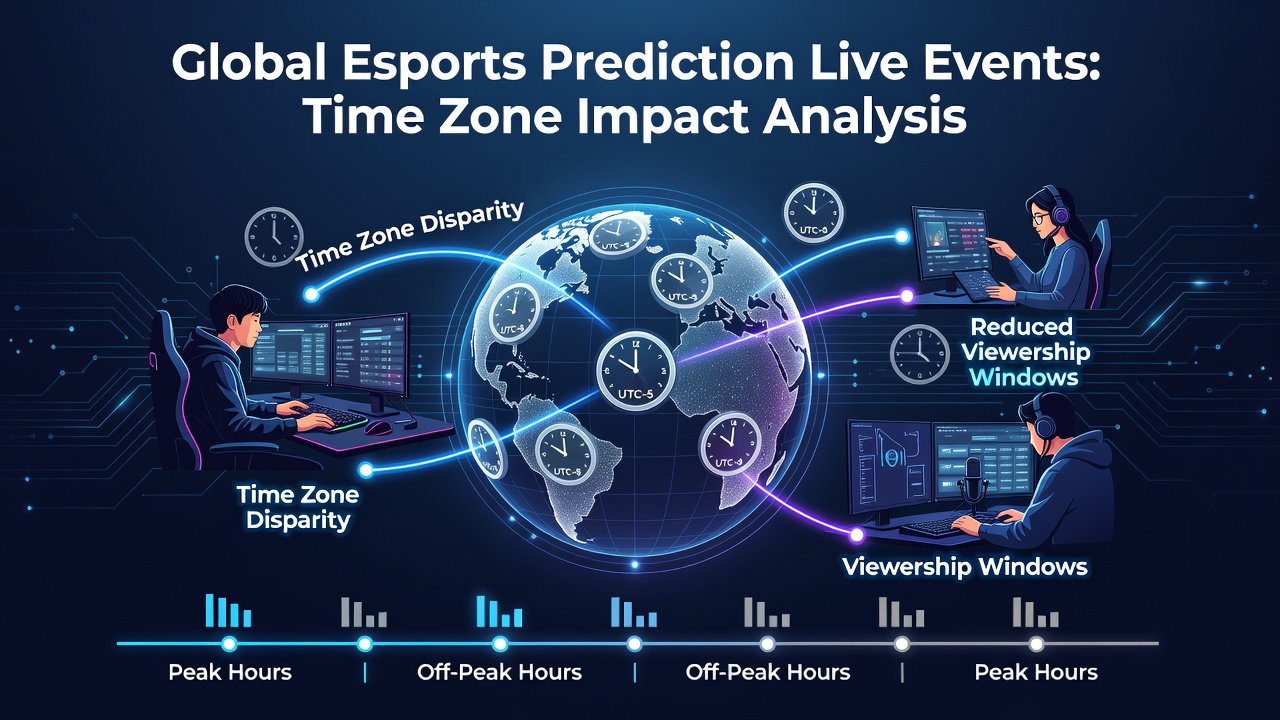
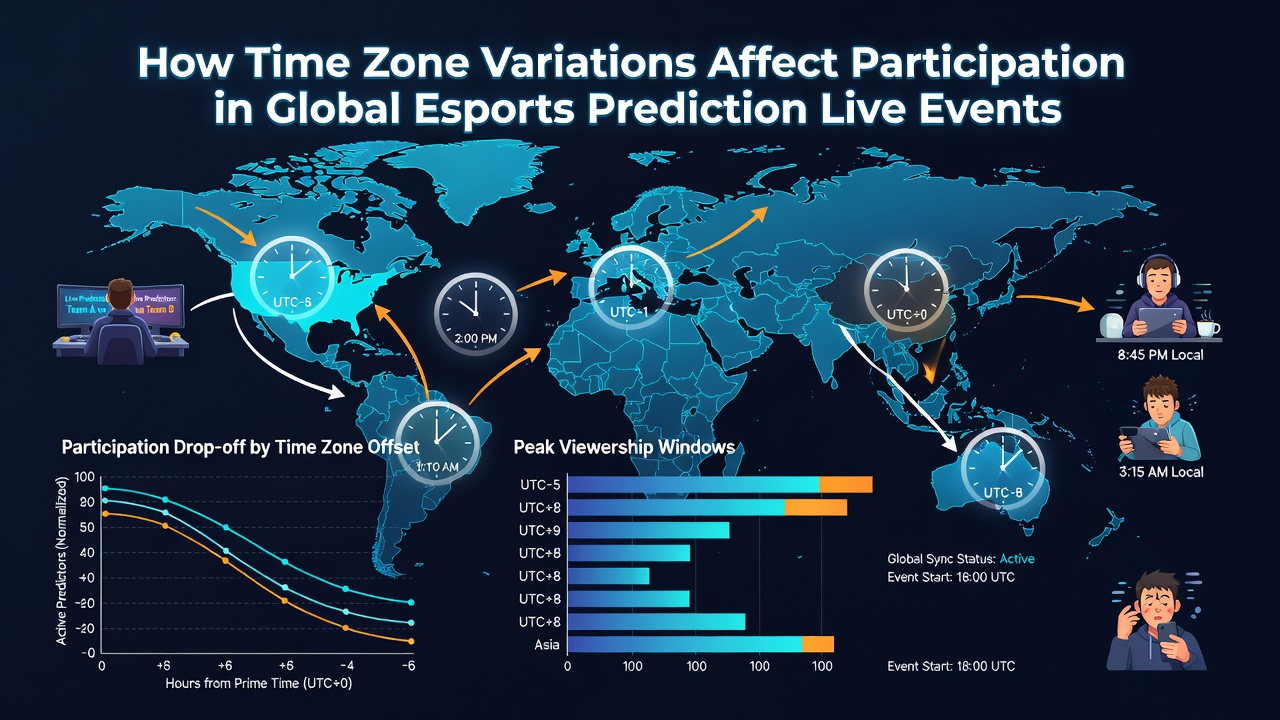
Time zone differences create measurable shifts in how audiences join live esports prediction events, where participants forecast match outcomes in real time across platforms that span continents. Major tournaments often schedule broadcasts to align with peak hours in dominant regions, yet this approach leaves viewers in distant zones facing late-night or early-morning slots that reduce overall attendance figures. Data collected from events held between 2024 and 2026 shows consistent patterns where participation drops by 30 to 40 percent when start times fall outside local evening windows.
Researchers tracking viewer logs during international competitions note that Asia-Pacific audiences maintain higher engagement when events begin between 8 PM and 11 PM local time, while European and North American participants show similar preferences shifted by their own meridians. These patterns emerge because prediction formats require sustained attention over several hours, and fatigue sets in faster when viewers stay up past their normal routines. Organizers have responded by rotating start times across different tournament phases, a tactic that distributes access more evenly but still leaves gaps for regions like South America and Africa where infrastructure and scheduling data remain less documented.
Regional Participation Patterns in Live Prediction Sessions
Live prediction events rely on simultaneous audience input through chat systems, polls, and interactive overlays, which means low turnout from any major region alters the overall dynamic. When North American viewers log in during their afternoon hours to accommodate Asian prime time, engagement metrics reveal shorter session durations and fewer repeat predictions per user. Conversely, events timed for European evenings draw strong participation from Africa and the Middle East, regions that share overlapping time windows with Central European clocks.
Studies conducted by academic groups at universities in Singapore and Toronto highlight how daylight saving transitions further complicate these calculations, since not all countries adjust clocks uniformly. In June 2026, several high-profile esports leagues adjusted their calendars to avoid conflicts with major sporting events in the United States, resulting in earlier starts that boosted Australian and New Zealand viewer numbers while slightly reducing participation from the western United States. Observers note that platforms hosting these events now publish multiple countdown timers adjusted for user-selected zones, a feature that helps mitigate confusion but does not eliminate the underlying attendance disparities.
Effects on Audience Retention and Interaction Quality
Retention curves flatten noticeably when prediction events stretch across mismatched time zones, because participants who join late miss early rounds and those who stay until the end experience diminished focus. Platforms report that chat activity peaks during the first two hours of any broadcast, then declines sharply once local midnight approaches for a significant portion of the audience. This drop affects the accuracy and volume of collective predictions, since fewer active users mean less diverse data points feeding into real-time leaderboards.
One study from a research consortium in Australia examined chat logs from a 2025 global tournament and found that teams with fans concentrated in similar time zones maintained steadier prediction streaks compared with globally dispersed groups. Event producers have tested staggered start times across multiple days to capture different regional audiences, yet this approach requires additional production resources and can fragment community momentum. Data from industry reports indicate that events using unified start times still achieve higher total unique viewers, even if per-region engagement varies widely.
Platform Adaptations and Scheduling Strategies
Streaming services and prediction platforms now incorporate automated time-zone detection that suggests optimal viewing windows based on user location, a development that emerged prominently after 2024. These tools draw from aggregated historical data rather than individual preferences, which helps new users but sometimes overlooks niche communities in underrepresented zones. Organizers increasingly release preliminary schedules months in advance, allowing regional fan groups to lobby for adjustments that better suit their demographics.
Coordinated efforts between leagues in South Korea, Sweden, and Brazil have produced joint calendars that alternate between early and late global starts, creating a more balanced distribution over the course of a season. Figures from these collaborations show modest gains in cross-regional participation when schedules receive advance publicity through localized social channels. Yet coordination remains challenging because broadcast rights, sponsor obligations, and player availability all impose constraints that limit flexibility.
Conclusion
Time zone variations continue to shape participation patterns in global esports prediction live events through measurable differences in attendance, session length, and interaction density. As tournaments expand their reach, scheduling decisions based on aggregated regional data become more refined, though complete parity across all zones stays difficult to achieve. Continued collection of viewership metrics from diverse geographic sources supports incremental improvements in how these events accommodate worldwide audiences.