Regional Trends in Affiliate Payout Models for Mobile Sports Forecast Content Creators
Logan Vogel · Jun 5, 2026
Regional Trends in Affiliate Payout Models for Mobile Sports Forecast Content Creators
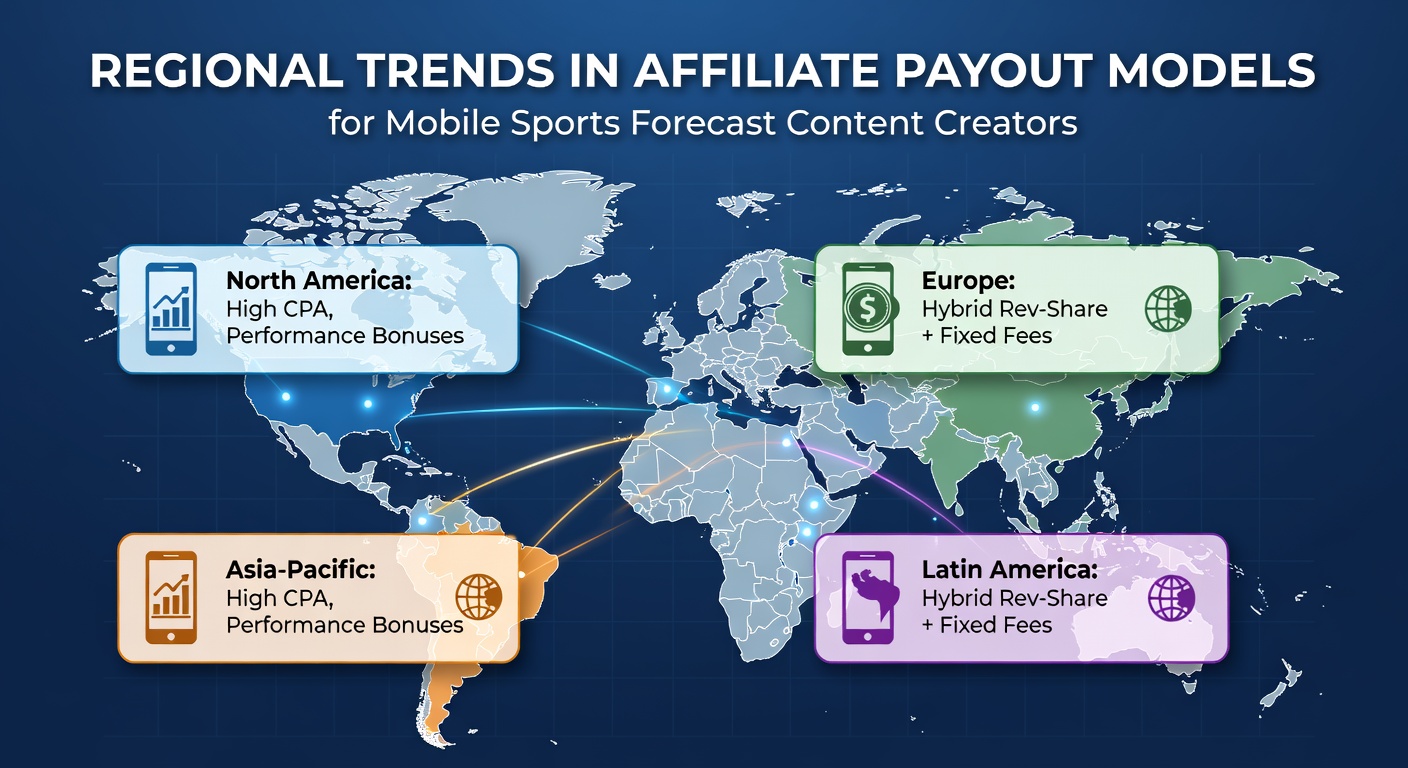
Data from industry analyses shows that affiliate payout models for mobile sports forecast content creators vary significantly by region, with cost-per-acquisition structures dominating in regulated markets while revenue-sharing arrangements prevail where mobile penetration runs higher. Creators who focus on prediction apps and forecast platforms often encounter these differences when expanding operations across borders, and patterns emerge clearly when examining North American, European, and Asia-Pacific markets separately.
North American Developments
Reports from market research firms indicate that United States-based creators frequently operate under CPA-heavy agreements because state-level licensing requirements tie payouts directly to verified user signups rather than ongoing activity. In June 2026 figures compiled by several tracking services revealed that hybrid models combining upfront CPA fees with smaller rev-share components accounted for roughly 62 percent of contracts signed in the previous twelve months. Canadian provinces present a contrasting picture where provincial regulators permit broader experimentation with performance bonuses layered on top of base CPA rates, allowing creators to earn incremental rewards once forecast users reach certain engagement thresholds.
Observers note that these structures encourage creators to prioritize high-conversion traffic sources, and data collected through affiliate networks shows average CPA rates for mobile sports forecast apps hovering between 85 and 120 USD per qualified install across major U.S. states. Creators who diversify their portfolios across multiple provinces sometimes negotiate tiered bonuses that scale with volume, a practice that has become more common as mobile adoption continues climbing.
European Variations
European markets display greater fragmentation because individual countries maintain distinct rules governing promotional activities tied to forecast services. German creators encounter strict documentation requirements that favor flat-fee or CPA models to maintain compliance records, whereas Spanish and Italian platforms lean toward revenue-share arrangements that spread earnings over longer user lifecycles. Industry reports published in early 2026 by regional gaming associations documented that rev-share percentages typically range from 25 to 35 percent for sustained mobile forecast traffic originating within the European Union.
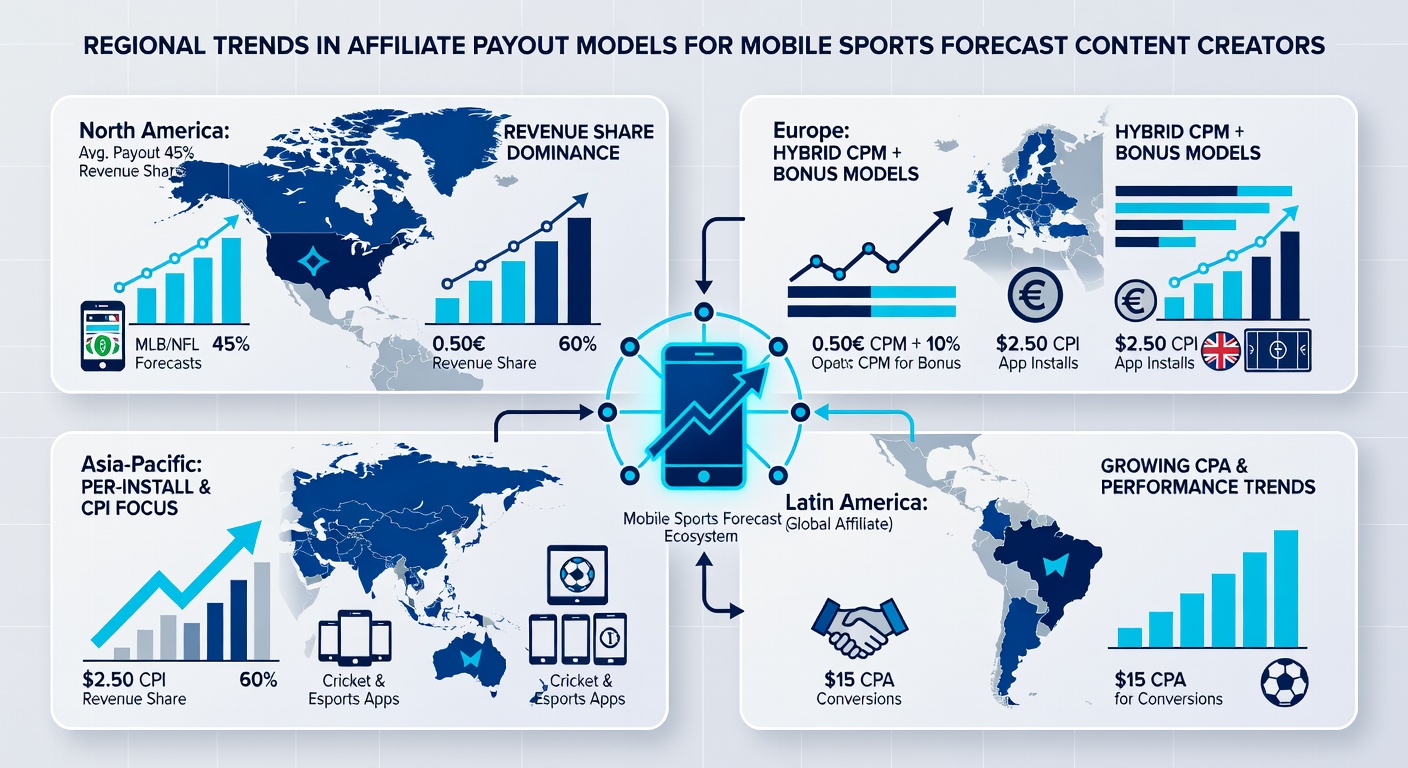
Payment timing also differs, with many European networks disbursing funds on a monthly basis once minimum thresholds are met, and creators who manage multiple language versions of forecast content often consolidate earnings across jurisdictions to simplify tax reporting. One study released by a university-affiliated research group in the Netherlands found that hybrid structures combining modest CPA elements with ongoing revenue percentages produced steadier income streams for creators who maintained consistent content updates throughout the year.
Asia-Pacific Patterns
Markets across the Asia-Pacific region emphasize mobile-first approaches, and affiliate models there frequently incorporate revenue-sharing components because user retention metrics remain high on smartphones. Australian data compiled by government statistical agencies shows that creators promoting sports forecast applications receive average rev-share rates between 28 and 40 percent when traffic originates from domestic mobile networks. In Southeast Asian countries, platforms often bundle CPA payments with performance incentives tied to forecast accuracy metrics that users achieve after installation.
Payment processors operating in these markets frequently support multiple local currencies, reducing conversion losses for creators who maintain audiences in several countries simultaneously. Reports indicate that hybrid payout models gained traction throughout 2025 and into 2026 as mobile data costs declined and more users engaged with forecast content on a daily basis rather than during major sporting events alone.
Emerging Markets and Cross-Regional Shifts
Latin American creators increasingly negotiate agreements that blend CPA and rev-share elements, reflecting the rapid growth of mobile sports forecast adoption in countries where smartphone usage outpaces traditional desktop access. Brazilian and Mexican networks have introduced bonus structures that reward creators when forecast users complete specific in-app actions, such as viewing multiple prediction rounds or sharing results within social communities. These adjustments appear in contracts signed after regulatory updates in 2025 altered licensing pathways for digital content platforms.
Payment frequency and minimum thresholds also vary, with some networks requiring accumulated earnings of 250 USD before processing transfers while others release funds weekly for high-volume creators. Cross-border operators who track performance across regions report that aligning payout models with local user behavior produces more predictable revenue, and several affiliate platforms now offer dashboards that break down earnings by country and model type.
Conclusion
Regional differences in affiliate payout models continue to shape how mobile sports forecast content creators structure their operations, with CPA arrangements prominent in North America, revenue sharing more common across parts of Europe and Asia-Pacific, and hybrid approaches gaining ground in emerging markets. Data collected through mid-2026 illustrates that creators who adapt contract terms to match local regulatory and behavioral patterns maintain steadier cash flow, while those who apply uniform models across regions encounter higher administrative overhead. Industry reports from sources such as the European Gaming and Betting Association and research compiled by Australian statistical agencies provide ongoing visibility into these evolving structures.