Rhode Island Targets Kalshi and Polymarket in Fresh Legal Challenge Over Unlicensed Betting Activities
Drew Meier · May 26, 2026

Rhode Island Targets Kalshi and Polymarket in Fresh Legal Challenge Over Unlicensed Betting Activities
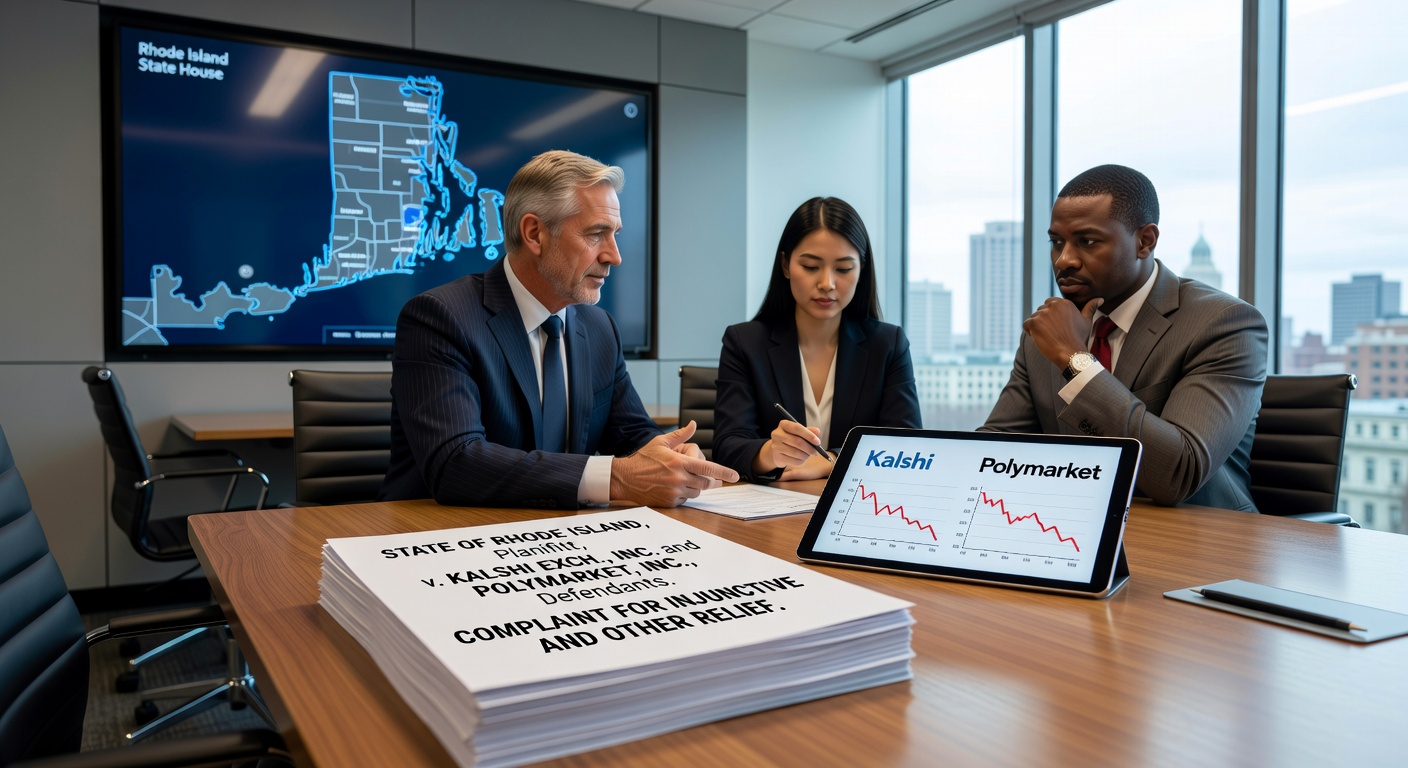
Rhode Island officials filed a lawsuit in May 2026 against prediction market operators Kalshi and Polymarket, and the complaint centers on claims that both platforms conduct unlicensed gambling activities within state borders while diverting income from the established sports betting framework. The filing asserts that these platforms function outside teh regulatory structure that governs licensed sportsbooks, and it points to specific revenue impacts on the state's controlled market. Court documents describe how users in Rhode Island access these services without the oversight required for traditional betting operators, and regulators emphasize that this setup creates an uneven competitive field.
Details of the State Complaint
The lawsuit outlines that Kalshi and Polymarket offer contracts tied to sports outcomes and other events, yet they lack the licenses mandated under Rhode Island law for such activities. State attorneys argue these offerings amount to unlicensed sports betting, and they claim the platforms draw participants away from the regulated system that funnels taxes and fees back into state programs. Evidence presented includes user data showing Rhode Island residents placing wagers on event-based contracts, and the complaint connects this activity directly to reduced collections for the official sports betting licensees. Rhode Island's regulated market, launched several years ago, relies on strict licensing to maintain control over operations and revenue streams.
Kalshi's Response Through Counter Filing
Kalshi moved quickly after the initial complaint by submitting its own legal action in federal court, and this filing challenges the state's authority to restrict prediction market operations under existing federal guidelines. Company representatives maintain that their contracts qualify as event contracts rather than traditional wagers, and they reference prior determinations from the Commodity Futures Trading Commission that support this distinction. The counter action seeks clarification on jurisdictional boundaries, and it highlights how prediction markets operate under a separate regulatory umbrella from state-level sports betting rules. Polymarket has not issued a parallel filing yet, though observers expect further responses as the case progresses through the system.
Background on Prediction Markets in Regulated Environments
Prediction markets allow participants to trade contracts based on future event results, and platforms like Kalshi and Polymarket have expanded rapidly across the United States in recent years. These services differ from standard sportsbooks because they often cover broader topics such as elections or economic indicators alongside sports, yet the Rhode Island complaint focuses specifically on the sports-related offerings. Data from industry reports shows these markets captured significant user interest, and the state lawsuit connects this growth to measurable shifts in revenue away from licensed operators. Rhode Island maintains one of the more structured sports betting systems in the Northeast, and officials there track performance metrics closely to ensure compliance and tax collection.
Regulatory Framework and Overlap Issues
State laws require any entity accepting sports wagers from Rhode Island residents to obtain proper authorization, and the complaint alleges that Kalshi and Polymarket bypass this step through their online interfaces. Federal precedents exist on the classification of certain contracts, yet the lawsuit stresses that state authority over gambling remains intact regardless of those classifications. According to industry coverage, similar disputes have surfaced in other jurisdictions where prediction platforms intersect with established betting rules. The case draws attention to how overlapping definitions create enforcement challenges, and it references ongoing discussions among state regulators about updating statutes to address emerging platforms.
Potential Effects on Market Participants
Users in Rhode Island continue to access these platforms while the litigation unfolds, and the lawsuit does not request an immediate shutdown. Instead, the filing seeks injunctive relief and potential financial remedies tied to alleged unlicensed activity. Licensed sportsbooks operating under state agreements have expressed interest in the outcome, since any precedent could influence how revenue flows between regulated and unregulated channels. Court records indicate that the state monitors transaction volumes through payment processors, and this information supports the claims about diverted activity. The proceedings remain in early stages, with scheduling orders expected in the coming months.
Broader Context of State and Federal Tensions
Multiple states have examined prediction market operations in relation to their gambling statutes, and Rhode Island's action aligns with these examinations without duplicating efforts elsewhere. Legal analysts note that the counter filing by Kalshi invokes federal preemption arguments, and this approach tests the balance between national contract rules and local licensing requirements. Reports from regulatory bodies in other regions, including analyses by the National Conference of State Legislatures, document similar friction points across different jurisdictions. The Rhode Island case adds specific details about revenue impacts, and it provides a concrete example of how one state quantifies effects on its controlled system.
Conclusion
The lawsuit and subsequent counter action establish a clear record of disagreement over licensing obligations and revenue allocation in Rhode Island. Court proceedings will determine how prediction market contracts fit within existing state frameworks, and outcomes could shape enforcement patterns for similar platforms. All parties continue to present their positions through formal filings, and the case remains active as of late May 2026.