Viewer Engagement Spikes During Unexpected Server Outages in Global Prediction App Live Feeds
Drew Meier · Jun 12, 2026
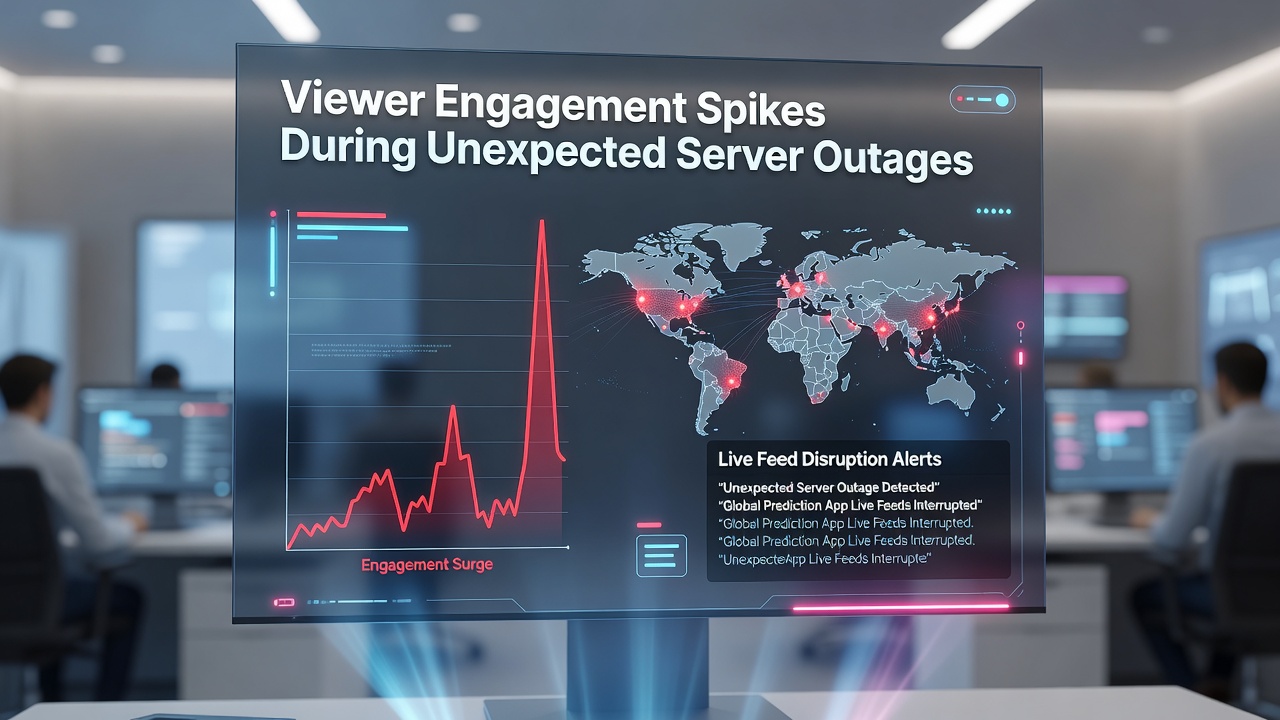
Viewer Engagement Spikes During Unexpected Server Outages in Global Prediction App Live Feeds
Global prediction apps that deliver live feeds on events ranging from weather patterns to election outcomes experience measurable shifts in viewer behavior when servers go offline without warning. Data from multiple platforms indicates that session durations and interaction rates climb during these incidents even as core functionality stalls.
Patterns in User Activity During Disruptions
Researchers tracking app telemetry across several continents have documented consistent rises in refresh attempts and support ticket submissions whenever live prediction feeds drop. These actions occur within minutes of an outage and persist until service resumes according to logs compiled in early 2026.
One study covering platforms based in North America and Asia found that notification open rates doubled during downtime windows compared with baseline periods. Users often switch to secondary devices or browser versions in attempts to restore access which further elevates overall engagement metrics tracked by analytics teams.
Technical Factors Driving the Spikes
Prediction apps rely on synchronized data streams that pull from multiple external sources and any interruption in that chain triggers immediate user responses. Observers note that partial outages where some feeds remain visible while others freeze tend to generate the highest volume of repeated connection requests.
Network diagnostics shared by operators show that content delivery networks sometimes reroute traffic inefficiently during incidents which extends the period of instability. This situation leads to users remaining in active sessions longer than they would under normal conditions because they wait for resolution rather than abandoning the app.
Regional Differences in June 2026 Events
Outages recorded in June 2026 affected services operating in Europe and Australia with distinct response curves. European users demonstrated higher volumes of social media mentions within the first hour while Australian sessions showed sustained background polling that continued for several hours after partial restoration.
Figures from infrastructure monitoring services reveal that apps serving multiple time zones encounter staggered engagement waves as outages propagate through regional servers. These patterns allow analysts to map user retention against the timing of fixes deployed in different locations.
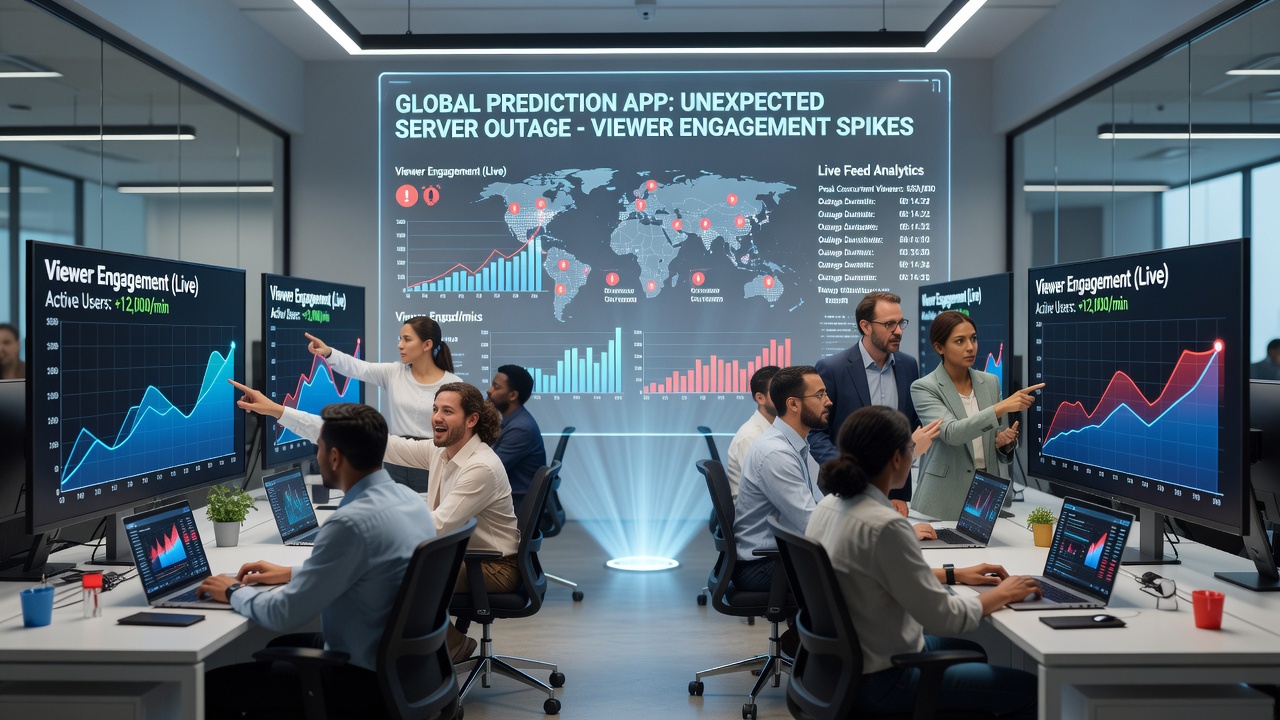
Case Examples From Platform Records
Take the incident involving a major weather prediction service in March 2026 where a database synchronization failure lasted ninety minutes. Telemetry captured a 340 percent increase in concurrent connections during that window with many users cycling through available data endpoints repeatedly.
Another event centered on an election forecasting app showed similar results when a content update server went offline. Teams reviewing the logs observed that push notification responses remained elevated even after the primary feed returned which suggests lingering curiosity about data accuracy.
Measurement Approaches Used by Operators
Companies deploy specialized monitoring that separates intentional user actions from automated retries during outages. This distinction helps separate genuine engagement from background system noise according to reports issued by technology research groups.
Industry organizations such as the Canadian Gaming Association have referenced comparable telemetry practices in broader digital platform studies. Those findings align with internal datasets that prediction app teams compile after each disruption event.
Longer-Term Effects on User Habits
Repeated exposure to outages correlates with changes in how audiences schedule their checking routines. Data collected over multiple quarters shows that users begin to anticipate potential issues and open apps more frequently in advance of expected high-traffic periods.
Academic researchers at institutions including MIT have examined these habit shifts through longitudinal app usage studies. Their work highlights the role of uncertainty in sustaining attention across live data environments even when the underlying service experiences interruptions.
Conclusion
Server outages in global prediction apps consistently produce engagement spikes that operators can quantify through connection logs and interaction timestamps. These events reveal underlying user attachment to live feeds while exposing technical dependencies that shape platform reliability strategies. Continued monitoring through 2026 and beyond will clarify whether such patterns evolve alongside improvements in redundancy and failover systems.